
We're so excited to share these new recipes with you but promise us this... don't rush into making them without understanding the "why" of how they'll work for you. Trim Healthy Wisdom arms you with that knowledge. The Wisdom Recipes are uniquely crafted to bring greater health to your home, but they are just a part of your Wisdom journey. The book takes it much further! Packed with wisdom and practical tools, Trim Healthy Wisdom will empower you to thrive, find balance, and embrace vibrant living. Don't miss out! Grab your copy and join us in making these your best years yet!
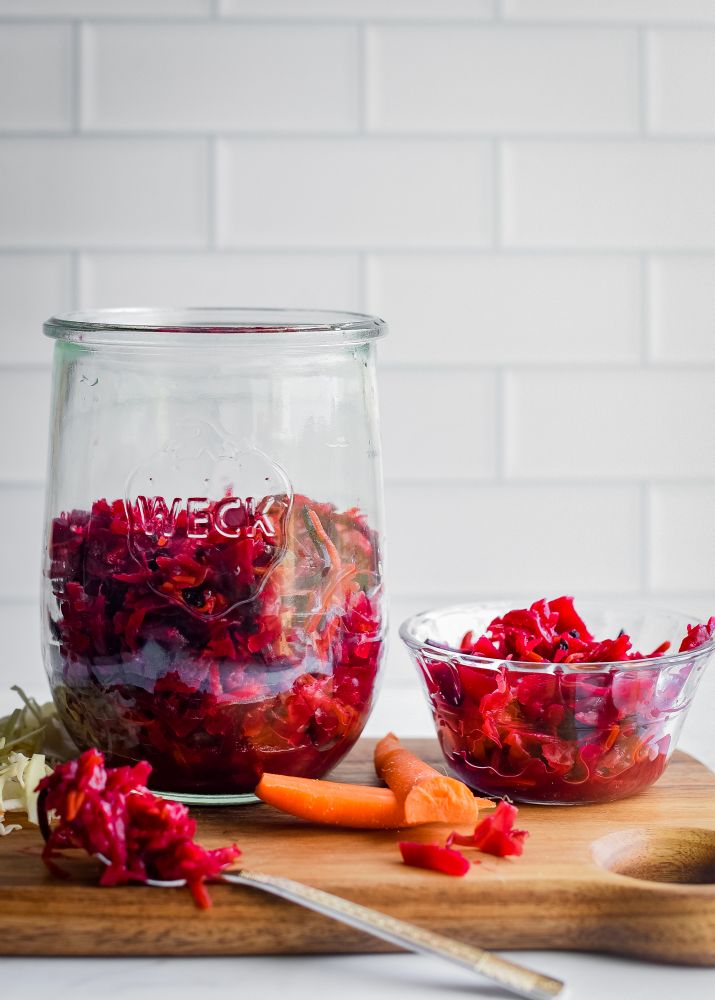
Why do you need another sauerkraut recipe when there are already so many fermented veggie recipes floating all over the internet? The reason I want to offer you my recipe is that I don’t follow all the rules, and it still works… really well! In the past, weighing everything out and using mathematical equations for the salt brine… the whole “use 2% for so many pounds of veggies” business, turned my free spirit brain off, and it stopped me from actually keeping up the habit of fermenting veggies. It wasn’t until I went rogue and just fermented them following extremely basic general guidelines that Kraut making became freeing and truly INKREDIBLE for me! Culturing veggies is easier than it sounds and people have been doing it for years before all the fancy thingamy jigs and equations people think they have to use these days to have success.
You can make as many jars at one time as you like, but the following recipe is for just one jar. If you want to make many jars of Kraut, double, triple, or quadruple the ingredients. They last many months in the fridge. We love organic veggies, and of course, we choose them whenever we can. But if your budget can’t swing organic, don’t worry—culturing the veggies removes the toxins!
Check out the Ten Gut Gifts chapter, pages 807-837, in Trim Healthy Wisdom for the benefits of sauerkraut for your gut and immune health.
This sauerkraut will keep for around a year in the fridge, although I don’t think it will last anywhere near that long before being gobbled up. The flavor just keeps getting better with time, but to keep the microbes robust and teeming, you could add a scoop of Probio Plus every couple of months if you made many jars, and some of them end up sitting in the fridge for a long time.
If preferred, you can use a fancy airlock lid like “Masontops Pickle Pipe Air Lock Lids” if you want. They do make fermenting foolproof, but I have made plenty of wonderful batches with a regular ole lid. That being said, plastic mason lids fare better in an acidic environment than metal lids, which can get rusty and impart a metallic-like flavor to veggies that rest against the lid. Plastic lids do not seal as tight either, which makes it easier to burp your veggies if they look like they need to release a buildup of pressure caused by the carbon dioxide produced during successful fermentation. You will know they need a good burp if the lid looks slightly puffed or expanded. Burping is super easy… just open the lid and release the air pressure and then screw it back on and you’re done! Often, I don’t burp mine at all and all goes well.
After opening your jar and eating some of your InKredible Kraut, try and push the remaining veggies back down and into the brine, to keep it fresh looking and tasting.
~ Serene
Culturing veggies is easier than it sounds, and people have been doing it for years before all the fancy thingamy jigs, and equations people think they have to use these days to have success. This sauerkraut will keep for around a year in the fridge, although I don’t think it will last anywhere near that long before being gobbled up. This recipe is part of the Wisdom Recipe Collection.
Top up the water till the veggies are covered, but make sure you leave 2 inches clear at the top for air expansion. Place a plastic (not metal) lid back on top of the jar (see our brand recommendations HERE) and then leave the jar on your counter for five to seven days. When ready, your veggies should have a lovely effervescent tart zing. Once the 5-7 days have passed, put your cultured veggies in the fridge to slow down the fermentation process.