We think it’s time for an intervention with these two. All this quarrelling – this “nah.. nah… nah, nah nah, nah… I’m better than you” nonsense needs to be nipped in the bud. Okay… Stevia… you go sit over there – calm down! We know you’ve been called many names that don’t fit who you are but time to let it go… what? They’re cruel names? Yes, they’re cruel and they’re uncalled for but you can learn to forgive and move on.
Now, Honey…. Honey! Get back in this room, don’t you dare walk out in a huff! You do so have a place. Not needed? That’s ridiculous… God made you with a purpose, now sit down over there. No, not on the carpet, we’ll never get you out! Stay in your jar on that side of the counter. Okay… as far away from stevia as possible, huh? Well, we are going to hash this out and you two are going to come together and shake hands at the end of this… or else!
Maybe we’ve finally lost our marbles carrying on an actual conversation with honey and stevia, but something needs to be done about the cold war brewing between these two sweeteners. They both meet different needs, they both have health benefits, and they are both NATURAL. Have you pitched a tent on one side of the sweetener argument and there you are determined to stay? In this article, we’re going to let each side air their grievances and then give both a chance to take the stand and share who they really are. Hopefully, when we’re done…. we can all have an appreciation for the merits of both of these God-given sweeteners.
Let’s Clear the Air
Those look like real tears falling from stevia, so it looks like we need to address that hurt first. We’re going to shine some love on honey shortly too, but not until some issues on stevia’s side have been set right. She’s been called a “fake sweetener” – ouch that stings considering she is a beautiful green plant and her sweetness is only extracted – never altered.
Stevia extract powder is not “created” in a laboratory, like artificial sweeteners. She’s every bit as natural as honey, maple syrup or sugar itself. She’s been called overly processed, bleached, responsible for insulin spikes (despite the fact that she does not raise blood sugar). She’s often blamed for triggering “sweet taste addictions” that will never go away and cause people to overeat. What else? Oh yes, she’s been labeled an unbiblical sweetener. But here’s what hurts the most – she’s been blamed for infertility and miscarriage. All joking aside now – some of these are some pretty serious accusations. Let’s tackle them.

Drawn by Timothy Copeland (age 17)
Processed and Unnatural?
Much of this finger pointing at stevia comes from it being lumped in with the pink and purple packets of artificial sweeteners at your grocery store. Stevia is not sugar, which is perceived as “natural” – so what else could stevia be, but an artificial sweetener… a fake! This notion could not be more wrong. If you’ve heard the speculation that artificial sweeteners keep you fat by raising insulin levels – there may be some truth in that but don’t lump stevia in there. A Study published in the 2010 issue of Appetite comparing sugar, aspartame (an artificial sweetener) and stevia revealed that stevia reduced both blood sugar and insulin levels as compared to the other two sweeteners. This same study revealed that the stevia group did not over eat at subsequent meals.
Stevia is grown to maturity then the leaves are dried naturally. The sweetest parts of the leaf are extracted via water (which simply means they are soaked for periods of time). This water extract is then filtered with the use of food grade alcohol (in the case of THM stevia – every ingredient used – even this alcohol is organic). Those of you who have ever made a vanilla extract in your kitchen will know that this part of the process is exactly the same one used when extracting vanilla flavor from the vanilla bean.
But how does the leaf start out as green and the powder end up as white? Stevia extract is often unfairly bashed due to the presumption that it is bleached. While it is true that some stevia products are bleached at the end of processing, organic stevia farmers do not typically bleach the extract (THM stevia is never bleached). Since not all parts of the stevia plant are sweet and some are even bitter, extraction needs to occur for this sweetness to be isolated. The sweet taste of stevia comes from the glycosides inside the leaf. Glycosides are naturally a whitish color, they can be anything from a creamy hue to a stark white depending on the strain of plant.
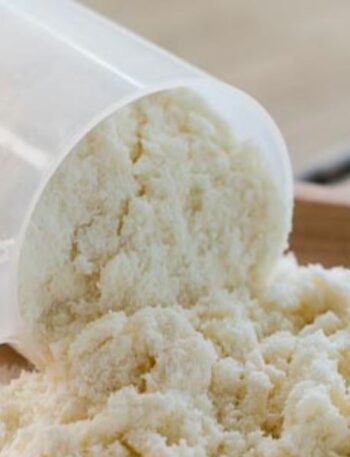
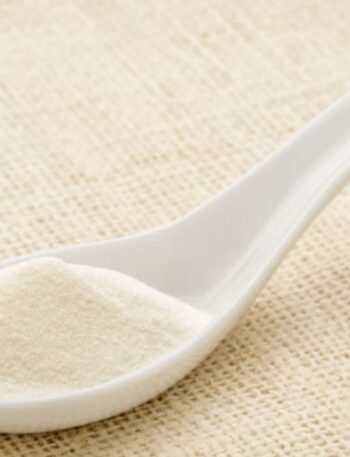
Once the green part of the leaf (chlorophyll) is separated during the extraction process, the glycosides remain. But even though they’ve been separated from the other non-sweet parts of the plant, these glycosides are not chemically altered from their original state. The end result after they are dried is a white, fluffy powder. This powder is then usually granulated, making it easier to spoon out or pour through shaker holes. THM Pure Stevia Extract Powder is a little different from most other extracts in that it is not granulated. We chose to leave out this extra step because in our opinion it changes the flavor of the stevia – making it slightly more bitter (according to our taste buds) and we also wanted as few processing steps as possible from leaf to powder. True, it’s harder to shake out but that is why we “doonk”.
So yes… stevia undergoes some processes to get to the white powder state. This does not mean it has been debauched into something not recognized by the human body. It is surprising that many people caught up in the stevia vs honey cold war ditch stevia thinking it is too processed or not natural enough yet they embrace and ingest essential oils. Heads up – those oils don’t just drip naturally from the petal or leaf. They are extracted using similar processes in many cases as stevia undergoes. As we’ll soon learn, honey undergoes some processes too.
If you prefer to grow stevia leaves in your garden, dry them, soak them then follow further steps until you can pulverize the redried leaves into a green powder – go right ahead. This homemade stevia option is certainly fine for ultra-purists who prefer the whole leaf option rather than the extracted glycosides but there will be more bitterness in this powder. We used to think that while the green powder didn’t taste as good, surely it was the only type that contained all the many health benefits of stevia? Our thinking was that the white glycosides did not pose actual harm but they probably didn’t contain many health goodies either – sorta neutral health ground. We were wrong. A 2012 study published in volume 64 of Nutrition and Cancer showed that the extracted sweet part of stevia kills up to 71% of human breast cancer cells (MCF-7) after 72 hours of treatment invitro. Researchers also found that this stevia compound acts as an antioxidant for healthy cells and helps protect them from damage. It does the exact opposite to the breast cancer cells and floods them with toxic free radicals. This halts DNA replication and disrupts the cancer cells’ mitochondria, causing the cancer cells to die. The extract itself has also shown significant anti-inflammatory, immune-boosting and blood sugar-stabilizing effects.
The Scary Stuff
Does stevia cause infertility and miscarriage? These are fair questions and they continue to arise as stevia gets more time in the spotlight. No use putting our heads in the sand and ignoring these questions just because we love having a natural sweetener that is calorie free and doesn’t raise blood sugar. If it’s dangerous, let’s logically find out. We could not encourage something that is damaging to fertility and health.
The whole controversy over stevia and fertility started when it was rumored that women in two indigenous tribes of South America women chewed on the herb as a contraceptive (or drank the tea – there are different claims). There is no data showing that this did in fact work for these women and many researchers point out that if stevia did have contraceptive properties, then the native population of Brazil and Paraguay would certainly be affected, which is simply not the case. Many researchers have been quick to make the argument that it is likely that if the contraceptive effect of stevia were real, scientists would have long ago discovered that fact and isolated the compounds responsible.

Drawn by Katie Myers (age 12)
It was this rumor which grew into folklore that triggered many hundreds of studies attempting to see if there is any real connection between stevia and fertility issues. In the 1960′s a study was published where rats were given extremely high doses of liquid stevia (in place of water) which caused a downward trend in their fertility. If you hear someone say, “Stevia causes infertility,” this is the study that entrenched that claim into people’s minds whether they know the details about that study or not.
Hundreds of subsequent studies with better methodology and larger numbers of test subjects have shown that stevia does not pose a risk to fertility, especially in the dosages of normal consumption. A recent study done at the Primate Research Center of Chulalongkorn University in Bangkok, Thailand once again studied the effects of extreme high doses of stevia on rodents but again revealed opposing results to the initial controversial 1968 study. The researchers not only looked at the rodents ingesting the high doses but on two subsequent generations. They found that health, mating and fertility were not affected at all, in any of the generations, even with a dosage of 2,500 mg/kg. The recommended daily dose for humans is 2 mg/kg. Another recent study published in the Journal of Endocrinology and Reproduction (Vol. 12, 2008) concluded that stevia rebaudiana had no adverse effects on the fertility of adult female mice.
But… we’re talking rodents in those studies. What about human fertility? Professor Kruc, the Perdue University biochemist who headed up the initial rat/stevia study in 1968 summed up the likelihood of stevia affecting human fertility. He admitted that the reason the rats in the study experienced fertility issues was because of the overdose of the stevia they were given. For the same effect to be had in humans, a 120 lb. human would have to consume upwards of seven pounds of stevia a day. Also, these rats were fed extremely high doses of dried green stevia from the entire plant ground, not just the leaves. It’s not unusual for stems and roots to contain higher amounts of toxic components that leaves do not (elderberry is a great example of this).
In fact, the use of stevia and its positive influence on blood sugar (which can also be researched in hundreds of studies) has been touted to improve fertility in women with pcos. Once insulin levels decrease when sugars and starches are lowered in the diet, cycles normalize and fertility has a much better chance of returning.
Miscarriage – this is a heartbreaking topic. As authors of Trim Healthy Mama, we have both suffered miscarriages – we would never wish that painful loss on any family. We have each had two miscarriages but we had them before we ever began using stevia. We never blamed our diets which were high in honey and maple syrup at the time probably because those two are such common sweeteners.
We had no idea as to exactly why we experienced those losses but due to our knowledge of the high incidence of miscarriage, we grieved the babies we would never hold and eventually accepted it as one of the parts of life where you may never have an answer to the “why.” When dealing with the trauma of miscarriage sometimes we’re just desperate to have a reason – grief is blinding, feelings of loss are overwhelming and confusion is high. It’s human to grasp at anything different in our lives that may or may not have been a cause. Some women can have many full term pregnancies then suddenly their body will not carry a pregnancy – “WHY????!!!!” we scream. While there is no scientific evidence to put any blame on stevia for miscarriage, there are anecdotal reports of women who begin stevia use and then relate their miscarriage to that. The tribal folklore and the early rat studies that are often stated as factual keep the , “could it have been stevia?” question twirling around in women’s minds. It is the only difference they can think to point to in their lifestyle.
Sadly, the bottom line is – miscarriage is extremely common. An article entitled, “Miscarriage Statistics” adapted from the book, Hope is Like the Sun states, “Sources vary, but many estimate that approximately 1 in 4 pregnancies end in miscarriage; and some estimates are as high as 1 in 3. If you include loss that occurs before a positive pregnancy test, some estimate that 40% of all conceptions result in loss.”
Solid evidence does back up certain reasons for miscarriage though, at other times – only God knows. Before stevia is blamed, one should look at known causes. Chromosomal Abnormalities – the sperm and the egg meet up but cannot line up because one is faulty accounts for 60% of miscarriages with Immunologic Disorders coming in second. While many women have wonderful full term pregnancies in their late thirties and forties, miscarriage risk increases 12% after age 30 and goes up 39% after age 35. One 2007 study published in An International Journal of Obstetrics and Gynaecology showed a 75% miscarriage increase for mothers aged 35–39 years and a five-fold increase where the mother was aged 40 and above (relative to mothers aged 25–29 years). So age plays a big factor.
Homocystene levels also greatly matter. Researchers in Bergen/Osb Norway studied several thousand patients and reported that Homocysteine levels higher than 10-10.7 increased a woman’s chance of a miscarriage by a more than 1/3. Vaginal infections are another culprit. A 2003 study carried out at Gynecological Sciences Perinatology and Puericulture Department of “Policlinico Umberto I” found these infections to be a big risk factor for miscarriage. The study found women with vaginal infections were 31.5% more likely to experience miscarriage than for mothers in the control group.
A too thin uterine lining, lack of progesterone, thyroid disorders…the list of actual known causes of miscarriage goes on and on. Stevia usage does not even register on the radar in the scientific world of miscarriage and infertility.
One thing is for sure, while solid evidence that stevia causes infertility or miscarriage is not to be found (even though multiples studies have attempted to do so), there are many reputable studies pointing to high blood sugar and insulin resistance as reasons for both miscarriage and infertility. We would never want to start saying, “Sugar caused my miscarriage! Or, “Too much honey caused my friend’s or sister’s miscarriage,” but it is good to know the facts. We have talked to several doctors about the miscarriage/stevia concern along with Dr. Redash (OB/GYN) who helps head up the THM Research Institute. He sees no reason to tell women in their reproductive years not to use stevia but does see reason to warn women against sugary foods while pregnant. If there is blame to place, let’s place it solidly where it is founded – on a high sugar/high starch modern lifestyle which causes disastrous metabolic and hormonal changes to the human body.

Drawn by Zakkary Schilievert (age 7)
The American Diabetes Association says that high glucose levels can increase a woman’s chance of miscarriage anywhere from thirty to sixty percent. These are not “maybe’s” – these are hard numbers. According to Dr. Christine Lee in an article entitled “Diabetes and Fertility,” high blood sugar also creates an increased risk of having a baby with birth defects. She says, “During the first few weeks of pregnancy, when a baby’s vital organs are just beginning to form, high blood glucose can cause damage to the embryonic cells.”
There are too many studies to cite supporting the connection between miscarriage and high blood sugar and insulin issues but here are a few of interest: A 1998 study pulished in Cell Biochem Function found that plasma levels of glucose (blood sugar) were significantly higher in habitual miscarriage than in controls. A 2006 study in Akush Ginekol (Sofiia) showed that high Hb A1-c levels (average levels of blood sugar) in the first trimester of pregnancy had a primary role in the occurrence of early miscarriages. Women who are insulin resistant are 4-5 times more likely to have a miscarriage. A 2006 study cited in Akush Ginekol (Sofiia) showed that high Hb A1-c levels (average levels of blood sugar) in the first trimester of pregnancy had a primary role in the occurrence of early miscarriages.
Having laid all this out to help clear stevia’s name – pregnancy should not be a time for stress and worry. Everyone on plan should feel comfortable with the particular sweetener they choose to use. We want mamas to do their own research, not just to take our word for it. If one wants to use a little honey or another plan approved sweetener like xylitol, erthyritol or even chickory or monk fruit extracts while pregnant because they can’t shake fears or concerns about stevia, that’s fine. Coconut sugar is another natural sugar that may be fine in small amounts for pregnant mamas who don’t have serious insulin resistance. But caution – keep the amounts small – while coconut sugar is gentler on your glucose levels than sugar itself, it does have an impact. And in light of all the evidence concerning high blood sugar and risk of miscarriage and infertility we do advise that you not go overboard with honey or other natural higher glycemic sweeteners for your own and your baby’s health sake.
We are extremely comfortable using stevia in our own homes although our children use honey as well since they are growing and have higher metabolic needs than adults. Serene loves stevia as a sweetener and she has had two healthy pregnancies using it as her chief sweetener (although she uses a little raw honey as well). This is not to say she will never experience another miscarriage (God only knows that) but nothing has made her change her mind on it. So let’s move on and address some of honey’s grievances.
Ditched
Honey feels a bit scorned. She’s been ditched by many mamas for sweeteners that don’t raise blood sugar and this hurts since she’s been around since ancient times sweetening up people’s lives. There are many references to her in the Bible and rightly so since she is high in vitamins (especially high in much needed B vitamins) and rich in minerals like iron, zinc, potassium, calcium, phosphorous, magnesium and selenium. Teaming with enzymes, raw honey has some undeniable healing abilities. Nothing shines like honey as a holistic allergy medicine since it actually counters pollen allergens. It is antibacterial, antifungal which makes it an incredible wound healer. It promotes the growth of good bacteria in the intestine and here’s a biggie – it helps counter high homocysteine levels to help maintain a healthy heart. Considering what we discovered earlier about homocysteine levels and miscarriage it seems this alone is a compelling argument to keep a little raw honey around to ingest regularly.

Drawn by Sarah Sikes (age 16)
Little – the Key Word
Proverbs 25:27 says, “It is not good to eat much honey…”. The problem in our culture is that when honey is used, it is usually in the “too much” vs the “little” category. Many whole food recipes that are supposed to be so natural and good for you call for anywhere from a half to a full cup of honey which is then paired with flours! This combination of high carbs upon high carbs is not kind to cells that are already too stuffed with blood sugar from our modern diet. All the health benefits of honey can be quickly overshadowed by its ability to raise blood sugar – especially when paired with other starches or fruits as it so often is.
Honey does not need to be ditched altogether (we’ll tell you how to use it wisely soon) but liberally using it as your chief sweetener can get your health and weight in trouble. This is why we expound upon some of its health benefits on page 187 of Trim Healthy Mama then say… “Did you know that honey can make you very fat?” This surprises many but a little shock factor is sometimes needed. Lots of people think subbing honey for sugar will magically turn their health and weight around simply because it is considered to be superior health wise over sugar. Short answer – nope.
The world we live in is vastly different to Biblical times when insulin resistance was unlikely. If there was a caution to not eat too much honey in Biblical times it seems more necessary to heed that warning these days than ever before. Pre-diabetes and Type 2 diabetes are a murdering epidemic and on the rise. A full fourth of the adult population in the U.S. is walking around with chronically high blood sugars that if diagnosed would be in the diabetic category. While pure forms of glucose like honey or sugars from dried fruits like dates were much needed in Biblical times due to their more physically demanding lives, the main need in our day and age is a stabilization of rollercoaster riding blood sugars! Our modern lives are so vastly different from ancient times. We ride in cars, they walked. We use a washing machine and turn on a tap for water. They beat clothes in the stream and had to haul water from a well. You get the picture. And cells that were not fed a lifetime of a too high glucose diet would have been much more insulin receptive, so a bit of honey here and there was much needed.
Find a Source for Raw Honey
It’s likely that the honey sitting in your cupboard has gone through some refining and processing. Unprocessed honey is the safest for your blood sugar and due to what it contains – has the most astounding health benefits of all forms of honey. The bits of bee pollen, propolis and honey comb in unprocessed honey boast amazing health power! Bee pollen has 96 known available nutrients and is 40% proteinwhich slows down the rise of blood sugar, the waxy comb itself is anti-inflammatory and also slows down the rise of blood sugar.
This most virgin kind of raw honey is optimal health wise but it crystallizes extremely quickly, so is not appealing to consumers. Therefore most of the honey available has been processed to prevent this crystallization. If your honey is raw and local to you – well done, you probably have a good source and it still retains many health benefits. But if your “raw” honey is not crystallized and full of little bits of pollen, propolis, honey comb (and even pieces of bees LOL) it has been through some processes. This is okay, remember, as we learned with stevia not all processing is “bad.” But, it is important to remember it is not in its original state where its effect on blood sugar is greatly tempered. Let’s not ditch honey in the dust but neither should we delude ourselves that honey comes to our cupboards in the same state in which it comes out of the hives.

Drawn by Isaiah D (age 10)
Grocery store honey – this is not something we recommend for adults on Trim Healthy Mama. While raw honey has a moderate glycemic index in the low thirties, pasteurized honey that is bought in most grocery stores is about the same as table sugar when it comes to spiking your blood sugar. It has a GI index in the high sixties or low seventies – depending on the brand. Since most adults have some form of insulin resistance – best to stay clear away. Growing, wiry children without any weight issues may be able to sweeten with this form of honey as it still offers a lot more vitamins and minerals than table sugar (we have some skinny children who use it) but anyone with weight or blood sugar issues would do best to avoid.
More than ¾ of the honey on grocery shelves is ultra-filtered. This is a high tech procedure where honey is heated, sometimes watered down and then forced at high pressure through extremely small filters to remove all traces of pollen. This is very different from traditional filtration where only the “bits” we talked about earlier are removed. The reasons for ultra-filtration would require a whole other article but suffice it to say, we are not saying this processing of ultra-filtering itself is necessarily horrible. We’re just evening the playing fields and showing that most honey these days is much more than minimally processed. Testing has revealed that 75% of store bought honey is ultra-filtered and all traces of pollen have been removed.
Up until April this year (2014) a pure honey label did not mean that bottle is filled with pure honey. New guidelines are being finalized to crack down on this fraudulent practice. Many brands of honey have been cut with corn syrup. Companies bottling honey have not been required to list how much honey was in the bottles or how much corn syrup. A “pure” honey label just promised there was some pure honey inside. These new guidelines for labeling honey put forth by the FDA in April still do not necessarily mean the honey you have or are about to buy is all honey though. Until these regulations are finalized a lot of the honey sitting on the store shelves or in your cupboards have not been transferred over to the new guidelines. And even when the new laws go through – you’ll know if your honey is cut with corn syrup which is good but it will still be likely that it is ultra-filtered. It is thought that a good way to check to see if your honey actually is only pure honey and not cut with a filler is to put it in the freezer. Real honey’s freezing point is very low so it will not freeze and will remain runny.
How Can Both Honey and Stevia Work for Trim Healthy Mamas?
Look at the season of life you are in with a good dose of honesty. Choose which of these natural sweeteners should be your main one according to your needs and challenges. Are you currently in the weight loss part of your journey? Do you have blood sugar issues like insulin resistance, pre-diabetes or full blown diabetes? It doesn’t make sense for you to be sweetening with honey unless in small medicinal doses (1/2-1 tsp daily as a holistic health supplement). Stevia would be a much better choice for you at this time unless you have a real allergy to it and you need to choose another non glycemic, on plan sweetener. The exception to this would be for those who don’t have a sweet tooth and who rarely have desserts or sweet drinks. If you’re in weight loss mode but you’d rather just have the rare honey sweetened treat rather than frequently use stevia, that is a viable choice and it should not set you off track too much (but most of us THM’s love our daily sweet drinks and treats).
Are you now at goal weight? You may want to include a little more raw honey here and there. Don’t be afraid to put 1 Tbs. in your smoothies or shakes sometimes. But even though we are both at goal weight, we have not simply traded out stevia for honey. Most of our sweetness still comes from stevia but we enjoy more honey than we did in the earlier stages of our THM journey. If you are exercising a lot, running around burning up energy with a lot of responsibilities and feel like you can handle or even benefit from the glucose/fructose energy gift of honey, do so but always remember moderation. Overdoing even a natural sugar like this can take its toll once insulin levels spike – this is very inflammatory to the whole body and instigates disease. Serene likes to remind people that she used to be a skinny, raw honey and fruit gorger but her body was rampant with yeast because she overdid a good thing.
What if you (or more likely your husband) are a super high metabolism type and actually need to put on weight? In this instance it does not make sense to use stevia over honey. Try a little raw honey with every meal, always make sure to center these meals with protein and don’t’ forget to load the buttah on too for a good crossover effect!
Pregnancy is a time when women are more sensitive to sugar spikes from glycemic sweeteners and easily become more insulin resistant. Stevia can help meet those sweet tooth urges and go a long way to help prevent gestational diabetes and excessive weight gain. Again, if you’re pregnant do your own research and feel comfortable with your own choices.
What about children? As we mentioned, we have some super skinnies who need more honey and some others in different stages and with different metabolisms that need less. We often mix these two sweeteners in our children’s recipes. Our families call it “honey ‘n doonk” and it’s how our children roll. This not only saves our budget as honey is expensive but it lowers the overall glycemic index of their meal or treat. While children can handle and often need more glucose while they are growing, they too can easily overdo it. Our children love to “honey-n-doonk” their oatmeal or their smoothies many a morning on their own and the two sweeteners harmonize beautifully together in taste.

They’re finally hugging! Drawn by Josiah Russell (age 8)
Feel the Love
Some people have asked us how Trim Healthy Mama can be a Biblically-based book, yet encourage stevia over honey. As we’ve just pointed out, we do not promote it as better than honey, but more suitable as your major sweetener during a season of weight loss. We love both for different seasons and different reasons. Both are Biblical sweeteners, not just honey alone. God made the herb of the field and more than once the Scriptures describe leaves as God’s provision for healing. We’re not trying to say that these leaves are actual stevia leaves LOL!!, but our point is that God made herbs and put his provision of healing in them for us. God made bananas and potatoes, too. They, like honey are more suitable for different seasons of life – the growing years especially. No, they are not encouraged on the weight loss part of the plan (except for ½ a banana here and there), but remember for most of us – weight loss will be the smallest part of your THM journey.
Once you get to a healthy weight, you’ll learn to “Crossover” and include some of these higher glycemic foods, but in moderation – not in the way you used to use them. Yes, honey is a gift from God and the God who made honey; also wisely made stevia, with all its impact sweetness. We think it’s time they cross the aisles and make up!